Part 1: Overview of IMR 10
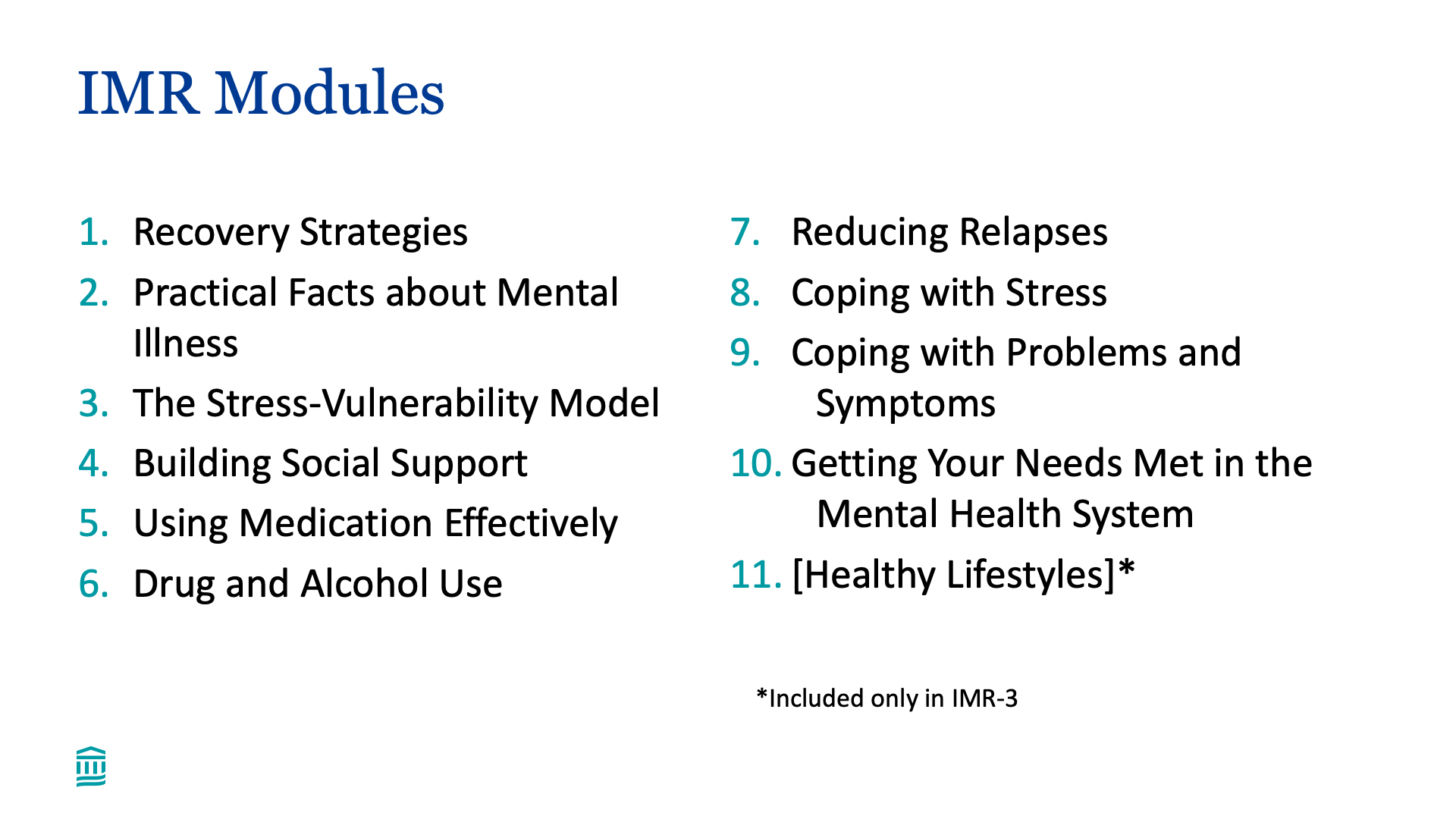
Click the play button below to listen to the audio and to advance the presentation.
Here you will find a summary of the content covered in each of the modules. Please take a minute to read through at least two of these modules by clicking on the module heading so that you can become more familiar with them. Each module has a few quiz questions to answer once you have had a chance to review the material.
Module 1: Recovery Strategies
Summary of Main Points: This topic introduces the concept of recovery, emphasizing that individuals with mental illnesses can lead fulfilling lives. It encourages participants to define what recovery means to them and to set personal goals that align with their vision of recovery.
Subtopics and Exercises:
- Defining Recovery
- Description: Exploring personal interpretations of recovery and understanding its multifaceted nature.
- Exercise: “What Does Recovery Mean to You?”
- Setting Personal Goals
- Description: Identifying and articulating specific, achievable goals that support one’s recovery journey.
- Exercise: “Setting Your Personal Recovery Goals”
- Developing a Recovery Plan
- Description: Creating a structured plan outlining steps and resources needed to achieve personal recovery goals.
- Exercise: “Your Personal Recovery Plan”
Module 2: Practical Facts About Mental Illness
Summary of Main Points: This topic provides factual information about various mental illnesses, helping participants understand their conditions better. It covers symptoms, causes, and common misconceptions, aiming to reduce stigma and promote informed self-management.
Subtopics and Exercises:
- Understanding Your Diagnosis
- Description: Gaining insight into one’s specific mental health condition, including typical symptoms and progression.
- Exercise: “Learning About Your Diagnosis”
- Common Myths and Facts
- Description: Addressing and debunking common myths associated with mental illnesses to foster a realistic perspective.
- Exercise: “Myths and Facts Worksheet”
- Biological and Environmental Factors
- Description: Exploring the interplay of genetic, biological, and environmental factors in the development of mental health conditions.
- Exercise: “Identifying Factors Affecting Your Mental Health”
Module 3: The Stress-Vulnerability Model
Summary of Main Points: This topic explains how stress and biological vulnerability can contribute to the onset and exacerbation of mental health symptoms. It emphasizes the importance of managing stress and reducing vulnerability through various strategies.
Subtopics and Exercises:
- Understanding Stress and Vulnerability
- Description: Learning how stress interacts with individual vulnerabilities to impact mental health.
- Exercise: “Assessing Your Stress and Vulnerability”
- Identifying Personal Stressors
- Description: Recognizing specific situations or factors that trigger stress responses.
- Exercise: “Personal Stressors Inventory”
- Developing Coping Strategies
- Description: Formulating techniques to manage stress and reduce its impact on mental health.
- Exercise: “Your Coping Strategies Plan”
Module 4: Building Social Support
Summary of Main Points: This topic highlights the role of social support in recovery, discussing how building and maintaining relationships can provide emotional assistance, practical help, and a sense of belonging.
Subtopics and Exercises:
- What Is Social Support?
- Description: Defining social support and understanding its various forms, including emotional, informational, and instrumental support.
- Exercise: “What Does Social Support Mean to You?”
- Why Is Social Support Important?
- Description: Exploring the benefits of social support, such as improved mental health outcomes and enhanced quality of life.
- Exercise: “Reflecting on Supportive Relationships”
- Increasing Social Support
- Description: Identifying ways to expand one’s social network and strengthen existing relationships.
- Exercise: “Mapping Your Social Network”
- Strategies for Connecting with People
- Description: Learning practical approaches to meet new people and initiate meaningful interactions.
- Exercise: “Creating Opportunities for Social Interaction”
- Strategies for Getting Closer to People
- Description: Developing skills to deepen existing relationships and build trust.
- Exercise: “Enhancing Relationship Intimacy”
- Disclosing Personal Information
- Description: Understanding the benefits and risks of sharing personal experiences and deciding when and how to disclose information appropriately.
- Exercise: “Planning Your Disclosure”
Module 5: Using Medication Effectively
Summary of Main Points: This topic addresses the role of medication in managing mental health conditions, providing guidance on how to work with healthcare providers to find the most effective medication regimen.
Subtopics and Exercises:
- Understanding Your Medications
- Description: Learning about prescribed medications, including their purposes, benefits, and potential side effects.
- Exercise: “Medication Knowledge Worksheet”
- Communicating with Healthcare Providers
- Description: Developing effective communication skills to discuss medication concerns and preferences with doctors.
- Exercise: “Preparing for Your Medical Appointment”
- Adherence Strategies
- Description: Identifying common barriers to medication adherence and creating strategies to overcome them.
- Exercise: “Medication Adherence Plan”
Module 6: Drug and Alcohol Use
Summary of Main Points: This topic explores the impact of substance use on mental health and recovery. It emphasizes understanding the relationship between drug and alcohol use and mental illness, recognizing triggers, and developing strategies to reduce or eliminate substance use to support recovery goals.
Subtopics and Exercises:
- Understanding Substance Use and Mental Health
- Description: Examining how substance use can affect mental health symptoms and the recovery process.
- Exercise: “Reflecting on How Substance Use Affects You”
- Identifying Triggers and High-Risk Situations
- Description: Recognizing situations, emotions, or environments that may lead to substance use.
- Exercise: “Personal Triggers Inventory”
- Developing Coping Strategies
- Description: Creating a plan to manage cravings and avoid high-risk situations.
- Exercise: “My Coping Strategies Plan”
- Exploring Treatment Options
- Description: Learning about various treatment modalities for substance use, including counseling, support groups, and medication-assisted treatment.
- Exercise: “Exploring Treatment Resources”
Module 7: Reducing Relapses
Summary of Main Points: This topic focuses on identifying early warning signs of relapse, understanding factors that contribute to relapse, and developing a personalized relapse prevention plan to maintain progress in recovery.
Subtopics and Exercises:
- Recognizing Early Warning Signs
- Description: Identifying subtle changes in thoughts, feelings, or behaviors that may signal an impending relapse.
- Exercise: “My Early Warning Signs Checklist”
- Understanding Common Relapse Triggers
- Description: Exploring common factors that can lead to relapse, such as stress, substance use, or interpersonal conflicts.
- Exercise: “Identifying Your Relapse Triggers”
- Creating a Relapse Prevention Plan
- Description: Developing a comprehensive plan that includes coping strategies, support systems, and emergency contacts to prevent relapse.
- Exercise: “My Relapse Prevention Plan”
- Building a Support Network
- Description: Establishing and maintaining relationships with individuals who can provide assistance and encouragement during challenging times.
- Exercise: “Mapping Your Support System”
Module 8: Coping with Stress
Summary of Main Points: This topic addresses the relationship between stress and mental health, teaching participants how to identify sources of stress and implement effective stress management techniques to enhance well-being.
Subtopics and Exercises:
- Identifying Sources of Stress
- Description: Recognizing external and internal factors that contribute to stress in daily life.
- Exercise: “My Stressors Inventory”
- Understanding the Impact of Stress on Mental Health
- Description: Exploring how stress affects mental health symptoms and overall functioning.
- Exercise: “Reflecting on Stress and Your Mental Health”
- Learning Stress Management Techniques
- Description: Practicing various methods to reduce and manage stress, such as relaxation exercises, time management, and problem-solving skills.
- Exercise: “Developing Your Stress Management Plan”
- Incorporating Healthy Lifestyle Choices
- Description: Understanding the role of nutrition, exercise, and sleep in managing stress and promoting mental health.
- Exercise: “Creating a Healthy Lifestyle Routine”
Module 9: Coping with Problems and Symptoms
Summary of Main Points: This topic provides strategies for effectively managing persistent symptoms and addressing problems that arise in daily life, empowering participants to enhance their problem-solving skills and reduce the impact of symptoms on their functioning.
Subtopics and Exercises:
- Identifying Persistent Symptoms
- Description: Recognizing ongoing symptoms that interfere with daily activities and quality of life.
- Exercise: “My Symptom Journal”
- Understanding the Problem-Solving Process
- Description: Learning a step-by-step approach to identify problems, generate solutions, and implement effective strategies.
- Exercise: “Problem-Solving Worksheet”
- Applying Coping Strategies for Symptoms
- Description: Exploring techniques to manage specific symptoms, such as anxiety, depression, or hallucinations.
- Exercise: “My Symptom Management Plan”
- Utilizing Support Resources
- Description: Identifying and accessing resources, including professional help and peer support, to assist in coping with problems and symptoms.
Exercise: “Building Your Resource List”
Module 10: Getting Your Needs Met in the Mental Health System
Summary of Main Points: This topic empowers participants to navigate the mental health system effectively, advocating for their needs and accessing appropriate services and supports to aid in their recovery journey.
Subtopics and Exercises:
- Understanding the Mental Health System
- Description: Gaining knowledge about the structure of the mental health system, available services, and how to access them.
- Exercise: “Mapping the Mental Health Services in Your Area”
- Developing Self-Advocacy Skills
- Description: Learning how to communicate needs effectively, assert rights, and participate actively in treatment planning.
- Exercise: “Practicing Self-Advocacy in Different Situations”
- Working with Mental Health Providers
- Description: Building collaborative relationships with mental health professionals to ensure effective treatment and support.
- Exercise: “Preparing for Appointments with Providersl”
- Understanding Your Rights in the Mental Health System
- Description: Learning about legal rights related to mental health care, including confidentiality, informed consent, and access to services.
- Exercise: “Reviewing Your Mental Health Rights”
- Finding and Using Community Resources
- Description: Identifying organizations, support groups, and government programs that provide additional assistance.
- Exercise: “Creating Your Community Resource List”
- Overcoming Barriers to Care
- Description: Addressing common challenges in accessing mental health care, such as stigma, financial constraints, or lack of providers.
- Exercise: “Problem-Solving Barriers to Getting Care”